
Interior Demolition in Akron, Canton and Northeast Ohio
You've got a remodel planned and the old stuff has to come out first. Interior demolition is the part nobody wants to pay a remodeler's hourly rate for: the cabinets, the tile, the carpet that's been down since the eighties, the basement drywall that took on water last spring. The new kitchen can't go in until the old one is gone, and the contractor you hired to build it may not want to be the one tearing it out.
- Owner-operated
- Owner on site for the work
- Free site visit and free written estimate
- Fully insured, $2 million general liability and workers comp
Zenith Excavating is my company, out of Akron, and I'm Vental Waggoner. Tearing out a kitchen is a different animal from knocking down a garage, and I want to be upfront about exactly what we take and what we don't. It's a two-man operation, and I'm on site for the job. Debris haul-off is included in the price. We cover seven counties (Summit, Stark, Portage, Wayne, Tuscarawas, Mahoning and Columbiana), so a kitchen gut in Kent or a wet basement in Cuyahoga Falls is in range.
What interior demolition covers
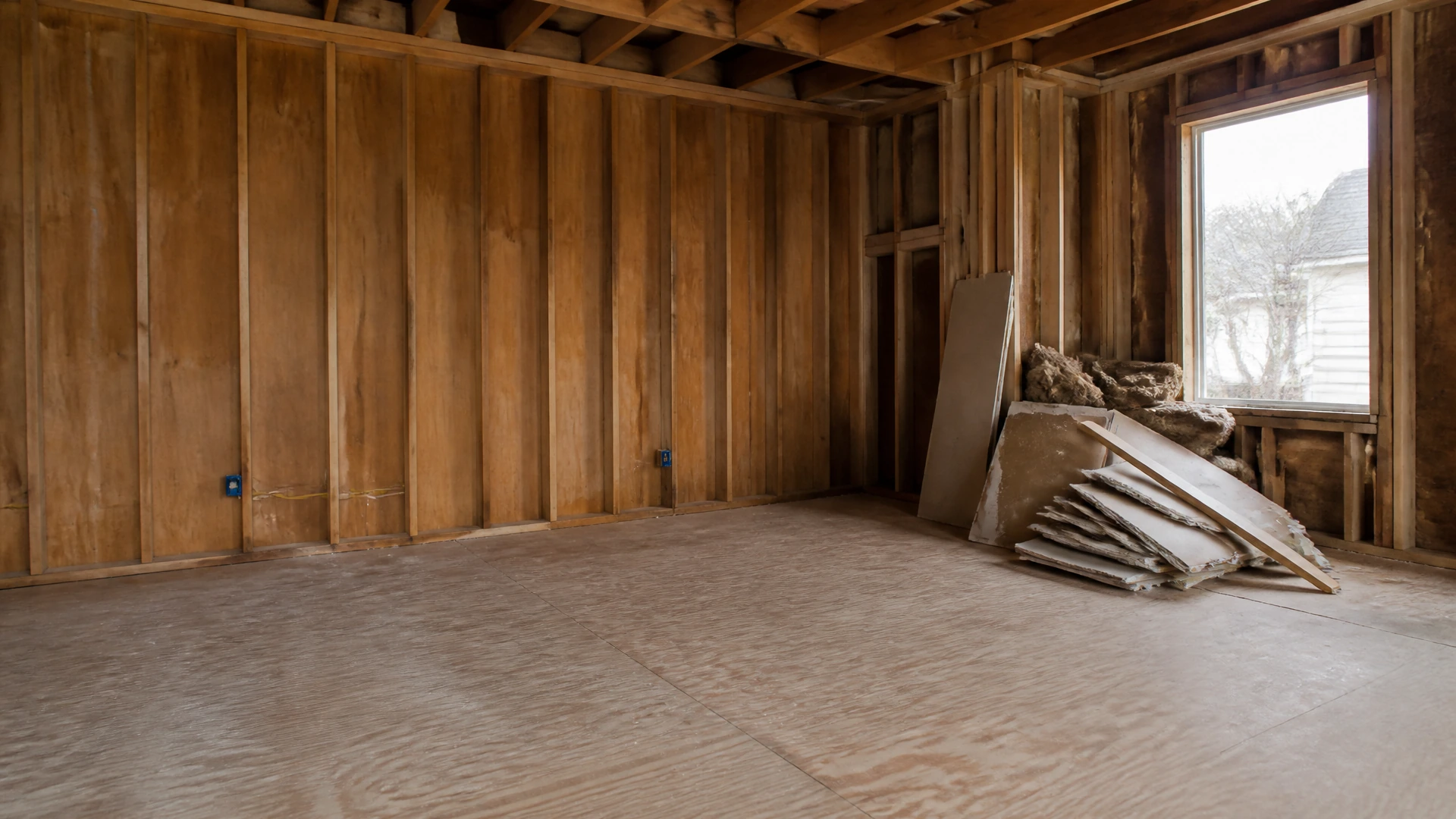
Interior demolition means taking out the inside of a room or a building while the structure stays standing. Sometimes it's called a gut or a tear-out. When it's only certain pieces, like the cabinets but not the floor, it's called selective demolition. Either way, the walls holding the house up stay put.
What usually comes out: cabinets and countertops, backsplash, soffits (the boxed-in space above upper cabinets), tubs and showers, tile, carpet, vinyl plank flooring, plaster and lath, popcorn ceilings, and walls that aren't holding anything up. Basements are a big one, especially finished basements that got wet.
It's almost always the first step of a remodel. It also comes up after water damage, when somebody's changing how a space is used, or when something gets found behind a wall that has to come out. People who hire it are usually the person who owns the house, a landlord between tenants, or someone flipping a property.
Sometimes the inside work is tied to an outdoor job. Say an attached garage is coming down and the wall it shared with the house needs to be opened up and cleaned out. If the whole house is coming down, that's a different page: see our house demolition page.
Kitchen and cabinet tear-out
A kitchen tear-out is heavier work than people think. Upper and lower cabinets come off the walls, along with any island and pantry cabinets. The countertops go, and that's where the weight is. Laminate is light. Granite and quartz are not, and a stone top takes more than one person to move without cracking it or the floor. The backsplash comes off, and with tile, the drywall behind it usually comes with it. Soffits, flooring down to the subfloor, old appliances, the sink and the range hood follow.
If you're opening up the kitchen to the dining room, a wall may come out too, but only if it isn't load-bearing. More on that below.
Not everybody wants the whole kitchen gone. If you're keeping the layout and just replacing cabinets or countertops, the cabinets can come out carefully enough to reuse in a garage or donate. Tell me which way you want it at the site visit, because careful removal and fast removal are two different jobs.
Before any of it starts, the water and gas to the sink, dishwasher and range have to be shut off and capped, and the appliances disconnected. Empty the cabinets before the job.
Bathroom demolition
Bathrooms are small rooms with a lot of heavy, messy material packed into them. Tile on the walls, tile on the floor, and often a thick mortar bed underneath the floor tile. A tub that could be fiberglass or could be cast iron, and a cast iron tub is a few hundred pounds of awkward. Shower pans, glass doors, vanities, the toilet, the mirror and medicine cabinet. Flooring down to the subfloor, and drywall or plaster when the walls need to be opened up.
It doesn't have to be the whole room. A tub-to-shower conversion, a new floor, or a vanity swap only needs part of the bathroom torn out. Either way, the work around the pipes has to be careful, so your plumber has something clean to connect to.
What I'd watch for is the floor around the toilet and the tub. Years of small leaks rot the subfloor there, and you won't know until the tile is up. And since a bathroom is usually in the middle of the house, the dust control matters more here than anywhere.
What drives the price
There's no honest per-square-foot number for interior work, because two rooms the same size can be completely different jobs. What moves the price is how much is coming out and how hard it is to get out. Tile and mortar are slower than carpet. A stone countertop is more work than laminate. The amount of debris matters, since every load has to be hauled. Access matters, like a basement with one narrow stairway or a second-floor bathroom. The age of the house matters, because older houses hide more. And surprises like mold or asbestos can change a job completely.
You'll get a written estimate after the free site visit, so you know the number before anything comes out. Haul-off is included.
Permits and load-bearing walls
Pulling out cabinets and flooring usually doesn't need a permit. Taking out walls, or touching plumbing, electrical or anything structural, may. That depends on your city, so check with your city or township's building department before the job, and ask who applies for it.
Load-bearing walls are not something to guess about. A load-bearing wall holds up the floor or the roof above it, and taking one out without a plan can bring part of the house down. We take out walls that aren't holding anything up. If a wall might be load-bearing, an engineer or a contractor has to look at it and plan the support before anyone touches it.
Asbestos, lead paint and mold
Older houses can have asbestos in floor tile, the glue under it (called mastic), popcorn ceilings and some insulation. They can have lead in the paint. You can't tell by looking. Suspect material gets tested before demolition starts.
If it tests positive, a licensed abatement contractor removes it. Zenith coordinates with that contractor. Zenith does not do asbestos or lead abatement. The abatement contractor and the Ohio EPA can tell you if your job calls for a survey or a state notice, so ask them before the tear-out is scheduled. If something suspicious turns up partway through, work in that area should stop until it's tested.
Mold is the other one. Water-damaged drywall and carpet in a basement often have it.
Water, power and gas during the job
There's plumbing and wiring inside most of the walls we'd take out. All of it has to be shut off and capped before the wall comes down.
People want to know if the rest of the house keeps running while one room is torn out. Usually the goal is to shut off only what feeds that room, so the rest of the house keeps water, heat and power.
How the tear-out goes
It starts with the free site visit. I walk the space with you and we agree on exactly what comes out and what stays. Then you get the written estimate.
On the day of the job, we protect the house first. That means covering the floors on the path out and sealing off the room with plastic so the dust stays where the work is. Then the tear-out, done carefully around the pipes, wiring and finishes that are staying. Then everything gets hauled away and the room is swept out.
How long it takes depends on the job. A kitchen or a bathroom is often a single day. A whole house can be several.
Living in the house during the tear-out
Most people stay home during an interior tear-out, and with the room sealed off and the floors covered, that usually works.
Pets and kids are the bigger question. A work area has nails, broken tile and open walls, and a dog that slips through the plastic is a problem for everybody. Plan on a closed door or a different spot in the house for them.
It's loud. If you share a wall in a duplex or a condo, tell your neighbors before the job. We're on the job weekdays from 7 to 5, and Saturdays only by appointment.
Surprises behind walls and under floors
You don't know what's under a floor until it's up. Rotten subfloor, old water damage, a second layer of flooring nobody mentioned.
If something bad shows up behind a wall, the question is how the price changes and who decides. You've got a written estimate up front that covers what we agreed to take out, and how a surprise gets handled is worth settling at the site visit, before work starts.
Salvage, recycling and haul-off
Debris haul-off is included, and it leaves with us. Some of what comes out of a kitchen has value. Cabinets, countertops and light fixtures can be resold or donated, and Habitat for Humanity takes some of it. If you want to keep or sell anything, pull it out or mark it before we start.
At the end, some people want paperwork, especially when an insurance company is involved. If you'll need anything for a claim, say so at the site visit.
Doing it yourself vs hiring
I'll be honest about this. You can save money doing some of it yourself. Pulling up carpet, stripping wallpaper and taking out closet shelves are fair game for most people. Countertops, cabinets and anything with plumbing behind it is where people get hurt or break something they meant to keep. Another way to save is to hire the demolition separately from the remodeler, so you're not paying building rates for tear-out work.
What you're paying for with us is the heavy part and the haul. And if something gets damaged, there's $2 million in general liability insurance behind the job, along with workers compensation.
Questions to ask any demolition contractor
Whoever you hire, ask them how long they've been in business. Ask whether they charge by the hour or give you one price. Ask for proof of insurance. Ask whether hauling and disposal are in the price or extra. Ask what they do if they find asbestos. Ask how long the job will take, what happens to anything worth saving, and for references. And don't pay the whole thing upfront. Pay as the work gets done.
Here are our answers. Zenith was founded in 2022. You get a free written estimate after a free site visit. We carry $2 million in general liability plus workers compensation. Haul-off is included. Asbestos goes to a licensed abatement contractor, not us.
Questions People Ask
How do you get debris out of a basement with one narrow stairway?
Carefully. A basement stairway takes a beating if nobody covers the treads and the walls. If the basement has a window or a door to the outside, tell me at the site visit.
My water damage is an insurance claim. Can you give the insurer what they want?
Insurance adjusters usually want photos and a clear list of what came out. Ask your adjuster what they need before the tear-out starts, not after.
Do I need to empty the kitchen first?
Yes. Clear out the cabinets, the drawers and anything on the counters, and move what you can out of the room. Anything left in the cabinets goes out with them.
Can you take out a fireplace or a chimney?
That's its own job, because a chimney runs through the house and out the roof. See our chimney removal page.
Do you do commercial interior strip-outs?
It depends on the building and what's coming out, so describe it in the form and we'll talk it through. For commercial buildings coming down, see our commercial demolition page.
Request a Free Estimate. List the rooms and what's coming out of them, add the address, and click Send My Request and I'll be in touch about walking it with you. Calls go to (330) 690-6842 during the week, 7 to 5.